By: Rich Redman
Before there was a United States, Landlocked Atlantic Salmon cruised their way up the Saranac River in what would become Clinton County New York. For nearly 13 miles they had natural gravel to spawn in, uninhibited, guaranteeing their future. The Saranac River was Lake Champlain’s best salmon spawning/rearing waters. That was about to change.
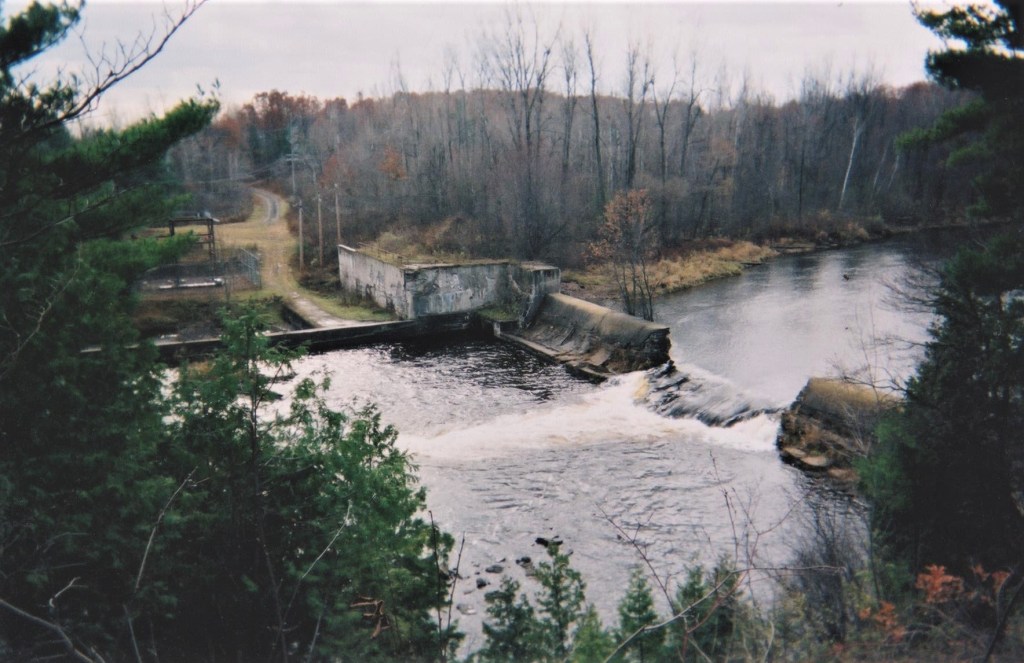
After the Revolutionary War, before the black powder smoke even cleared, the hand of man stepped in and changed things. A new Country was growing and industrializing. Forests were cut, and sawmills powered by dammed water from the Saranac River built a city. Plattsburgh was its name. Industry over the last 200 years has created obstacles to prevent the salmon from their natal spawning waters. It has been 2 centuries since salmon ran the river, but a new day, and a new river is dawning.

Indian Rapids Dam was breeched years ago for safety reasons, but the tight opening created high velocity flows, which biologists consider a velocity barrier to fish passage. Meaning the water flows too fast through the concrete opening for the fish to swim through. Removal of the dam itself will widen the opening to the natural channel dimensions.
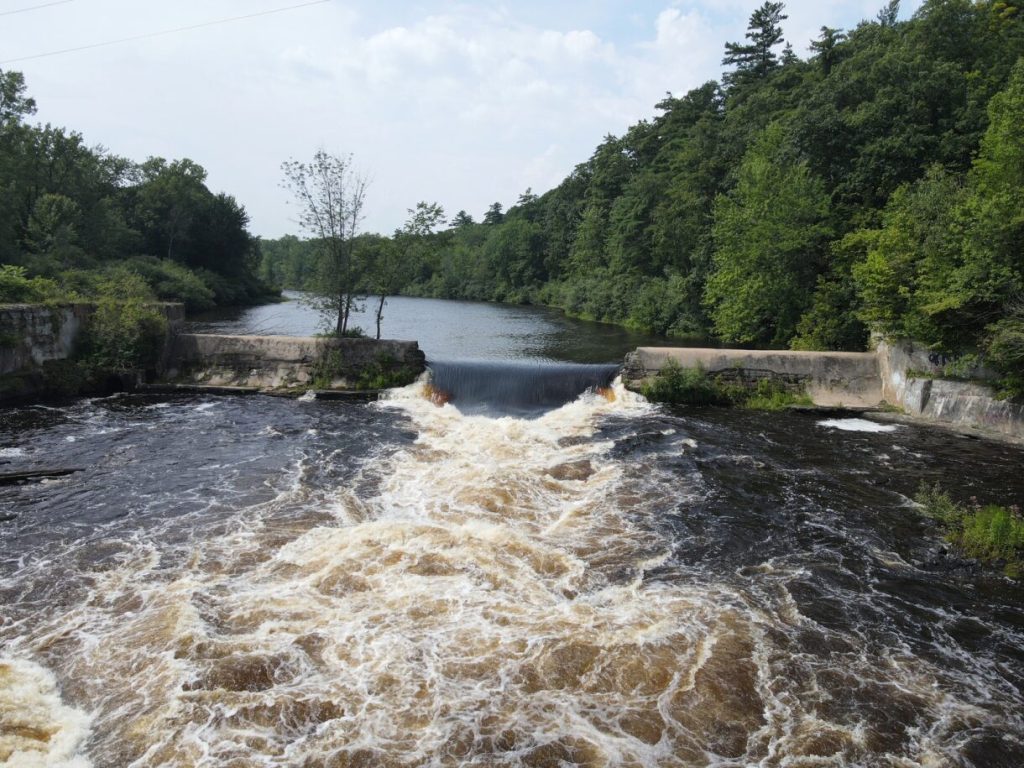
Existing rebar and other material that would make fishing, canoeing, and swimming dangerous was removed. With the industrial material removed, the river returned to a more natural look. With all the material removed, the channel was brought to proper dimensions, the riverbanks stabilized with riprap, seeded, and mulched. A bio-engineering project was installed with willow stakes, rooted dogwoods, and other native riparian plants to hold the banks, trap any sediment runoff and help provide habitat for bugs, which fish feed on.
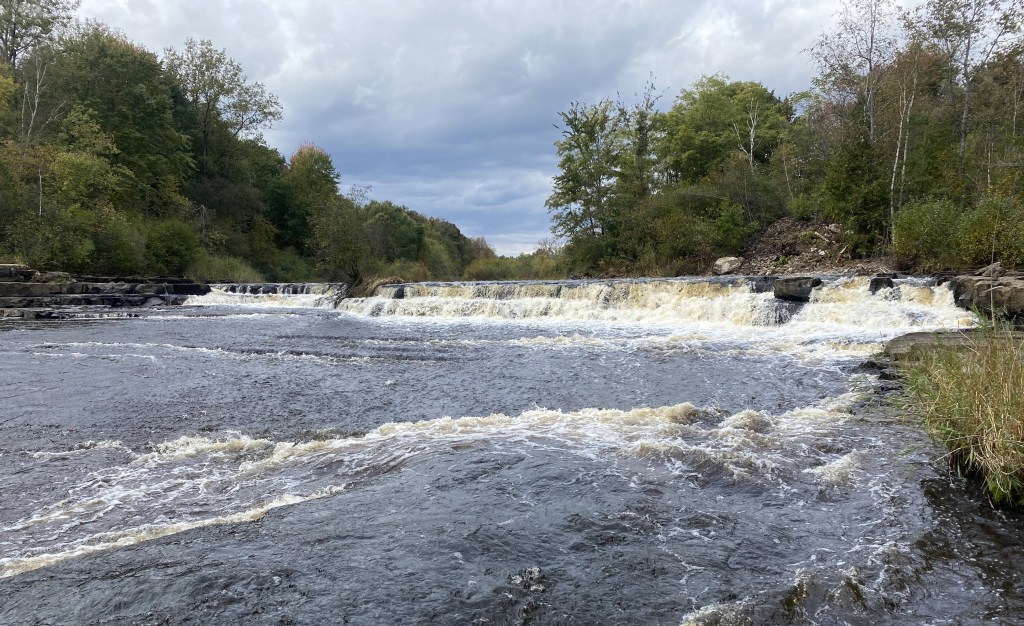
One point 4 miles upriver from the Indian Rapids site is the Fredenburg Dam. Remnants were located just west of the Northway Saranac River crossing. Old stone, log, and concrete dam remnants, plus steel beams and girders that once lay exposed in the river causing flow restrictions, and dangerous recreational conditions are now gone.

With the Imperial Dam fish ladder installed, the Indian Rapids and Fredenberg Dam remnants removed, landlocked Atlantic Salmon will be able to reach the Treadwell Mills power dam. The dam has an existing fish ladder installed but has never been tested due to downstream obstructions. If the fish ladder works successfully, it will be the first time Landlocked Atlantic Salmon have reached their natal spawning grounds at Kent Falls in over 200 years. Kent Falls is the natural barrier on the river for salmon. The spawning habitat between Treadwell Mills Dam and Kent Falls is considered prime spawning waters and is critical for the salmon’s natural reproduction. This spawning habitat is crucial to the salmons spawning and survival. It is optimal, compared to that located downstream. Reaching those spawning waters is the native Atlantic salmons future.
The cost of the removal of the remnants alone is well over $500,000. The Imperial Dam Fish Ladder is expected to cost in the millions.
Mankind created the problem when our fledgling Country was growing, now we can undo the damage and allow our native Landlocked Atlantic salmon to have free access once again to native waters. It has taken over 200 years to make things right, but it’s time for both man and fish.
 Lake Champlain Trout Unlimited
Leave a Reply